Saturday, December 13, 2014

Drake's '0 To 100' Named Top Song Of 2014

Drake's hit single "0 to 100" is earning top honors on Billboard's list of 2014's Ten Best Rap Songs.

 Billboard calls the song an "artistic achievement" that stands out because of Drake's unique rapping style and the song's "mesmerizing Wu-Tang Clan-like beat." 

 View the Youtube Channel Now!

Following "0 to 100" on the list is Jeezy's "Seen It All" collaboration with Jay Z at number two, followed by Migos' "Fight Night." Other artists on the year end list are Bobby Shmurda, Young Thug, YG and Wiz Khalifa.  

 
Over on the year's Ten Best Rap Albums list, YG's "My Krazy Life" took top honors for giving fans an album whose storylines make it feel like a movie.

Judge rejects Tracy's bid to delay...

At the number two spot is Killer Mike and El-P's second Run The Jewels album. J. Cole's recently released 2014 Forest Hills Drive came in at number three, while Migos' No Label II landed at number four.

Albums from Jeezy, Schoolboy Q, Big K.R.I.T., and Future were also among the year's best. 

Tuesday, December 9, 2014

Julie Greenwald Chairman/COO, Atlantic Records Group

At Atlantic, Greenwald has reaped the benefits of a diverse roster that includes rock stalwarts, pop upstarts and singer-songwriters. 

"You want to be strong in every area," she says. "This year we had No. 1 albums from Ed Sheeran, Coldplay, Trey Songz and Slipknot -- and Charli XCX, Ty Dolla Sign, Vance Joy and Clean Bandit all had big records." Atlantic's 7.1 market share as of the end of the third quarter is second only to Republic.

Strength in every area is part of her management style as well, since during her formative years at Def Jam, the Catskills-raised, Tulane-educated Manhattan resident worked in nearly every department in the company, starting as Lyor Cohen's assistant in 1992. "I got my hands dirty running every side of the company," she says. "I understand how hard it is to get records played at radio and to make a good video and come up with creative copy for an ad."

WPMG-Place Hot 100 Radio 

Greenwald's momentum looks set to carry into 2015. "I'm about to drop a new K. Michelle album and a new David Guetta album, and I have a bunch of newbies lined up, like Hoodie Allen and Melanie Martinez and Sevyn Streeter." The married mother of two prides herself on making a company of 270 employees a nimble one. "We are a very big organization," she says, "but we are set up so that each individual artist gets the bespoke service, time, love and attention."

My First Job: "I was a teacher in the New Orleans public school system in the Calio projects through Teach for America. It taught me a lot about patience, understanding and being resourceful."

How I Mentor: "I spend a lot of time with women inside my company. It's important to me that they understand that I understand how hard it is to juggle it all."

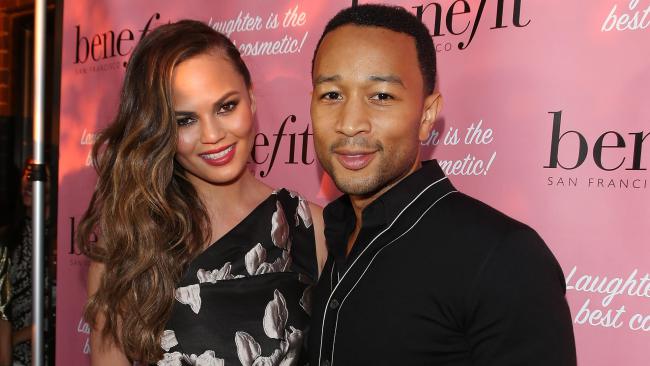
Singer John Legend and Wife Hire Food Trucks To Feed Hungry NYC Protesters

The couple paid for food trucks to feed New York protesters of the Eric Garner decision. Chrissy, who is also a food blogger, tweeted out the location of the trucks throughout the city


legendJohn Legend and his wife, model, and food blogger Chrissy Teigen, are putting their money where New York City protester’s mouths are, hiring a fleet of food trucks to feed the hungry protesters who have been out in the streets of New York City for days.

 View the Youtube Channel Now!

According to Vanity Fair, the singer and his wife hired the trucks, with the Bipartisan Report announcing via Twitter: “#johnlegend pays for a food truck in Lincoln square to feed #EricGarner supporters before the #NYC protest.”

Tiegen followed up, retweeting to her nearly 560,000 followers, “3-6pm. FREE food trucks by Trader Joe’s Union Sq. @ophelporhush #FergusontoNYC #NYC2Ferguson.”

Federal Autopsy Released on Ferguson...

"The New Soulful Sound of the World Wide Web"
This is not the first time Tiegen, known for her constant and humorous tweeting about food, has jumped into a politically-charged controversy. In October she briefly left Twitter after being harassed following a tweet critical of American gun policy.

Palace Music Hot 100 Radio...Teaser

Protesters continue to fill the streets of New York, as well as across the country, with the New York City Police Department bracing for increased activity following an announcement from NYPD Commissioner William Bratton, that the internal investigation into the death of Eric Garner could take up to four months.

Federal Autopsy Released in Ferguson Shooting

Additional autopsy was conducted at the request of the Department of Justice ...


ST. LOUIS (AP) — A federal autopsy in the Ferguson police shooting reached similar conclusions to those performed by local officials and a private examiner hired by 18-year-old Michael Brown’s family, documents show.
Federal Autopsy Released in Ferguson Shooting 
The Armed Forces Medical Examiner System’s autopsy on Brown, conducted at the request of the Department of Justice, was among grand jury documents that St. Louis County Prosecuting Attorney Bob McCulloch released Monday with little explanation. Other documents include transcripts of eight federal interviews of possible witnesses to Brown’s shooting in early August; police radio traffic; and an alleged audio recording of the shots fired by Ferguson police officer Darren Wilson.

 Drakes 0 to 100 named Top Song of 2014

Many of the documents contained information that was similar or identical to the materials that McCulloch released on Nov. 24 after a grand jury decided not to indict Wilson in Brown’s death. A transcript of testimony from an Air Force pathologist who performed the Justice Department autopsy was included in the November documents, but the autopsy report itself was not released until Monday.

The transcripts of the witness interviews that were released Monday were already included in previously released testimony heard by the grand jury.

The Justice Department autopsy found that Brown died from multiple gunshot wounds and had severe head and chest injuries, though it noted that the chest injury might have been an exit wound from a shot that entered Brown’s arm. The autopsy also found a minor gunshot wound to Brown’s right hand was evidence of close range discharge of a firearm.

WPMG - Teaser

Wilson told the local grand jury that his gun went off during a tussle with Brown through the open window of his police car moments before Brown was fatally shot.

The Justice Department is conducting a separate civil rights investigation into Brown’s death.

The Associated Press has reviewed all of the grand jury documents that have been released and none appear to include a transcript or a recording of a two-hour FBI and county police interview with Brown’s friend, Dorian Johnson, who was with Brown when he was shot.

However, the first batch of documents did include seven video clips of Johnson’s media interviews, as well as a transcript of his testimony to the grand jury.

Johnson was walking with Brown when they encountered Wilson in a Ferguson street. Wilson fatally shot Brown, who was unarmed, after a struggle.

WPMG-Place Hot 100 Radio 

Johnson painted Wilson as provoking the violence, while Wilson said Brown was the aggressor. He also said Wilson fired at least one shot at his friend while Brown was running away.

The transcript released in November notes that jurors listened to a recording of an Aug. 13 interview of Johnson by the federal and county investigators.

Ed Magee, a spokesman for McCulloch, acknowledged earlier Monday that his office didn’t release copies of FBI interviews with some witnesses at the request of the Justice Department. An FBI spokeswoman in St. Louis declined comment.

“Those reports are not ours to release,” Magee said.

Hours later, Magee advised reporters that “as promised, additional information concerning the grand jury testimony on the Michael Brown/Darren Wilson investigation is now ready to be released.”

Grand jury investigations are closed to the public. When McCulloch released documents last month, he said that he wanted transparency and believed “everyone will be able to examine that same evidence and come to their own conclusion.”

Graffiti Artwork 

Wilson resigned from the Ferguson Police Department in late November.

YouTube Makes Copyright Clearer

YouTube users have long been able to incorporate copyrighted music in the videos. But what will happen to the video once uploaded couldn't be known in advance. Whether a song will be blocked or monetized couldn't be known until the video is uploaded.


Now YouTube users get some transparency. Starting Monday, YouTube users can search the Audio Library to view usage restrictions, such as placement of advertisements and geographic limitations, of claimed songs in its catalog. This feature is enabled by YouTube's Copyright ID system that allows copyright owners to block the video, mute the audio or monetize the video that uses their song.

 WPMG - Palace Music Hot 100 Radio... Teaser Ad


Say, for example, a person wants to upload a user-generated video that incorporates "Boom Clap" by Charli XCX. A search in YouTube's audio library will reveal "Boom Clap" is an ad-supported song -- noted with the disclaimer "ads may appear" -- that is viewable worldwide. There's also a note explaining the content owner may choose to change its policies. 

Federal Autopsy Released-in Ferguson... 


Creators previously had access to a catalog of royalty-free, 320kbps tracks and sound effects for usage in their videos. To facilitate the process of finding the right song, YouTube allows the catalog to be searched by genre, mood, instrument and duration.

Apple TV Now Plays YouTube Ads in Videos


Internet set-top also adds apps for Fusion, Conde Nast Entertainment’s The Scene, UFC.TV and Dailymotion


Apple TV is again beefing up its content lineup, including an updated YouTube app with a redesigned interface — and the ability to serve ad-supported YouTube videos on big-screen TVs.
The $99 Internet set-top also has cut deals with four new content partners: Fusion, Conde Nast Entertainment’s The Scene, UFC.TV and Dailymotion.

With the update, YouTube now offers the No. 1 video site’s complete video catalog; previously, YouTube videos that required ads to be played to view them were unavailable on Apple TV. “This is a similar situation to when we updated our iOS app — specifically that videos which required monetization weren’t available, like music videos,” a YouTube rep said. Other new features of YouTube on Apple TV include recommendations and predictive search.

It’s not clear whether the limitation on YouTube serving ads on Apple TV was a technical issue or a business one, and whether there is an ad-revenue sharing agreement between the two companies. An Apple rep referred questions to YouTube, while a rep for YouTube was unable to provide an answer.

Apple has been steadily adding content partners for the set-top box, as it faces a growing slate of competition including Google’s Chromecast and Android TV set-tops, Roku devices, and Amazon’s Fire TV and Fire TV Stick. Once described by company execs as a “hobby,” Apple TV represented a $1 billion business for the company in 2013 (including content sales through the box).
Here’s a rundown of the other new services on Apple TV:

  • Fusion, the joint venture between ABC News and Univision Communications, provides news and pop-culture coverage aimed a U.S. millennial audiences. Available for free on Apple TV, Fusion will provide an exclusive first look at the season premiere of “No You Shut Up” hosted by comedian Paul F. Tompkins.
  • Conde Nast Entertainment’s The Scene, available free on Apple TV, offers original programming from more than 20 of the magazine publisher’s brands including Allure, Bon Appétit, Glamour, Golf Digest, GQ, The New Yorker, Vanity Fair and Vogue, as well as content from partners including ABC News, Major League Soccer, Buzzfeed, PBS and The Weather Channel. (Disclosure: Variety is a content partner for CNE’s The Scene.)
  • UFC.TV offers the UFC Fight Pass ($9.99 per month) with access to several live UFC events, episodic content, original programming and library content from UFC and other mixed martial arts.
  • Dailymotion, free on Apple TV, provides access to 30 million short-firm videos to users worldwide.

What Can Apple's Antitrust Suit Teach Us About the Evolution of Digital Music?

By


Is the record business better off that it was eight years ago? The question comes to mind while following an antitrust lawsuit against Apple in an Oakland court that is revisiting a time when the industry was trying to build digital businesses while suppressing piracy.


What Can Apple's Antitrust Suit Teach Us About the Evolution of Digital Music?In terms of revenue, the record business is definitely worse off. But in terms of serving fans, the record business has made huge strides. Consumers today have far more access and enjoy better interoperability between software and hardware. And shouldn't happy consumers be the ultimate goal? 


The current court case may peter out soon enough. On Monday the case took a strange turn when the court learned the second of two plaintiffs did not purchase an iPod during the period Apple illegally restricted iPod owners' ability to play music acquired at other download stores. The judge may allow the trial to continue, however, and is giving the plaintiffs' attorney a day to find a new lead plaintiff.

Federal Autopsy Released in Ferguson 


Apple is effectively taking the blame for the demands placed on it by the record business during the digital music industry's formative years. Early in the history of digital music sales, the major record labels insisted retailers' downloads contain DRM to limit piracy. In hindsight these fears may seem unreasonable or unwarranted, but at the time piracy was far greater and present a problem.


The post-Napster days (the early- to mid-2000s) were a sort of golden age of peer-to-peer services, with an abundance of companies competing to satisfy consumers' desire for music. This easy access to free music was troublesome. Some people foresaw a nefarious marriage of storage space and ubiquitous, free music that would demolish any hopes of monetizing digital music. (Back in 2004, a 1GB SanDisk SD card cost $499. Today, a 128GB SD card, which holds over 1,165 hours of 256kpbs MP3 files, goes for less than $100.) Soon, all the world's music could fit on a single device.

View the Youtube Channel Now!


The lawsuit is ultimately an indictment of DRM. Apple's DRM, called FairPlay, meant iTunes purchases could be played only on iTunes software -- both Mac and Windows -- and only on the iPod. And until Amazon launched its MP3 store in 2008, the iPod could not play digital music from most other retailers (there were exceptions such as eMusic, which at the time only sold music from independent labels).

Whatever the outcome, the antitrust lawsuit against Apple is a nice opportunity to revisit the last decade's digital music business. It's hard not to appreciate the gains made since then.


First, the bad. Record business revenues were certainly better eight years ago. Recorded music sales had a retail value of $11.5 billion in 2006, according to the RIAA, 64 percent higher than $7 billion last year. One may pine for the days of growing digital download royalty checks and a bulkier physical business, but it's hard to argue today's market is not a vast improvement from that of 2006, a time when piracy was far more threatening, consumers were treated with distrust, and streaming services failed to gain traction with consumers.

But two things would end up changing digital music for the better: the iPhone, and a new era of streaming services.


The launch of the iPhone in early 2007 brought freedom and mobility to digital music. Apple -- and later Google's Android mobile platform -- allowed a smartphone owner to install apps from a number of competing digital music services. Streaming services took advantage. Pandora released its iPhone app in 2008. Spotify launched its mobile apps -- for iPhone and Android -- in 2009. An iPhone user still had to put in effort to buy MP3s outside of iTunes, but the iPhone still provided far more freedom than the iPod.

Because of apps, streaming services had access to consumers through their mobile devices. (Rhapsody and Napster, both precursors to Spotify, were shut out of the iPod. Rhapsody tried to gatecrash the iPod with a product called Harmony in 2004. Apple quickly updated the iPod software to prevent outside files.) People could stream a radio station, view YouTube or make playlists on a subscription service either at or away from home. And with the use of Bluetooth technology, mobile phones can be paired effortlessly to car stereos and wireless speakers.


Apple eventually ditched DRM in January 2009. Microsoft rebranded PlaysForSure in 2007, a year after it launched the unsuccessful Zune music player and service. But DRM didn't die out. It's alive and well -- and accepted without complaints by music consumers -- in the new music business.


DRM is fundamental to access-based services like Spotify. Subscribers that download tracks to mobile devices do so with restrictions. In the linga franca of subscription services, a download is actually a tethered download, one that is contingent and not owned in perpetuity. The basic precept of subscription services is access through payment. Once a person stops paying, access to the track is gone. (However, depending on the service, the track may still be accessed in a more limited nature on a free, ad-supported tier.)


Unlike the problems associated with DRM for CDs and downloads, consumers don't object to this type of DRM, because they are paying for access, not ownership.


The record business is increasingly characterized by this arrangement, which is clearly the future of entertainment. Where there once was a radio tower, or a Tower Records, now stands Pandora and Spotify. DVD and video downloads are being replaced by streaming services like Netflix. Many consumers -- especially the younger ones -- don't have the same predilection for amassing collections of recordings. Even though today's storage devices can hold huge libraries of downloads -- the fear of the 2000s -- the availability of broadband has led many consumers to legal streaming services, not curated lists of files.

Happy customers don't necessarily mean happy businesses, however. Shifting from a purchase-based business to an access-based one requires adjustments. Controversies have ensued. Some artists and labels are unhappy with the royalties received from streaming services. Publishers are continuously fighting for a greater share of service's revenue. Year after year, these services are put on the defensive by an industry caught in an uncertain transition.


But if customers are happy, if they have better legal options than illegal ones, and if they can be reached on a variety of devices at any time, isn't that ultimately good for business? Anybody with a computer or mobile phone is now a potential customer. Streaming may have its downsides, but it offers plenty of upside.

Between Napster's launch in 1999 and iTunes' debut in 2003, the music business had what seemed to be an insurmountable problem. A similar feeling exists today. The record business eventually built a download business. It can do the same with streaming.