Tuesday, May 30, 2017

Mary J. Blige Recruits A$AP Rocky for 'Love Yourself'

Mary J. Blige recruits a different rap star for her "Love Yourself" video. The newly released version of the track -- which appears on her 13th studio album, Strength of a Woman -- includes an assist from A$AP Rocky in the visual. 

According to Complex, the clip was shot by directors Taj and Dre in both Los Angeles and New York City. The self-love anthem shows the Queen of Hip-Hop Soul stunting in regal ensembles like a fire-engine-red fur number, and a stunning blue gown with a floor-length coat to match. 

The Harlem rapper, a fashion killa in his own right, also flaunts his runway-ready style by rocking a dapper, tie-less suit and a red track suit sans shirt throughout the visual. In one scene, Rocky and his twin even trade bars in the same room. Saxophone and trombone players plus a group of men dressed in all black with berets also appear. 
Earlier this month, Strength of a Woman topped the R&B Albums chart and also served as Blige's 20th career entry on the list. Mary is also set to embark on the album's namesake tour with special guest Lalah Hathaway this summer.

Monday, May 29, 2017

‘Wonder Woman’ Gal Gadot on Playing Lead Female Superhero


Wonder Woman has been around for nearly eight decades, but the superhero has never flown into theaters for her own title movie — until now, with Gal Gadot’s “Wonder Woman,” the final film of DC Comics’ trinity, which will be released on Jun. 2.
“Wonder Woman” being showcased on the big screen as a big-budget summer blockbuster has never been more meaningful than in 2017, when the conversation of women in the workplace, gender equality, and the pay gap has been at the forefront of Hollywood. And the significant moment has not gone unnoticed by its star.
“Growing up, I had Superman and Batman to look up to,” Gadot told Variety Thursday night on the blue carpet at the world premiere of the film held in Hollywood. “All the boys and all the girls, that’s what we had,” she said, reflecting on the male superheroes.
“I think that it’s so important that we have also strong female figures to look up to, and Wonder Woman is an amazing one,” Gadot continued. “It’s great that after 75…years that this character had been around, finally she gets her own movie.”
“Wonder Woman” also marks the first-ever live-action film to be directed by a woman with budget of more than $100 million. As for “Wonder Woman,” the flick cost $120 million to produce.
Director Patty Jenkins, who rose to prominence with Charlize Theron’s Oscar-winning “Monster” in 2003, also spoke with Variety at the premiere, discussing the lack of female directors in the industry.
“I think more diverse stories will cause you to hire more diverse writers [and] will cause you to hire more diverse directors,” she said of how the industry can progress to include more female voices. “Obviously the audience is there.”

Spotify Settles David Lowery, Melissa Ferrick Class Action Lawsuit with $43.4 Million Compensation Fund

[UPDATED] In a major victory for indie musicians, the combined class action lawsuits against Spotify brought by Cracker frontman and artist advocate David Lowery and singer/songwriter Melissa Ferrick have been settled with the music streamer establishing a $43.4 million fund to compensate songwriters and publishers whose work had been used by the service without proper licensing. 


Ferrick and Lowery had sued Spotify for $200 million and $150 million respectively. The two class action suits had been combined last year.
The $43.4 million fund will be used for compensation of past infringements by Spotify, and outlines a process by which Spotify and those involved in the class action suit “will work collaboratively to improve the gathering and collecting of information about composition owners to help ensure those owners are paid their royalties in the future." 
"It was Spotify's obligation to get licensees prior to using my music," Ferrick toldHypebot in an interview last year. "If my music is licensed properly. I have no issue with streaming services but I believe they should be following the law...  Protecting your music is as important as making it. Every musician should know and understand their rights."

The recent ruling by the U.S. Department of Justice in United States v. Broadcast Music, Inc. and United States v. American Society of Composers, Authors and Publishers

by Steve Winogradsky and Chris Castle 

A new ruling from the Department of Justice has confused many in the industry, from songwriters to publishers and even some lawyers. Here we break down the new ruling in a helpful chart, giving you a better idea of where you stand depending on your level of involvement with a given creative work.


The recent ruling by the U.S. Department of Justice in United States v. Broadcast Music, Inc. and United States v. American Society of Composers, Authors and Publishers has left many songwriters, publishers, motion picture and television producers and, yes, even lawyers scratching their heads to understand the import of the ruling.  Not to mention Texas Governor Greg Abbott who has written to Attorney General Loretta Lynch asking her to reconsider the DOJ ruling.
The authors have summarized the ruling in the chart that follows.  The thing speaks for itself.
As you will see, the left hand column lists the various roles of a music creator (starting with “Songwriter”) or music user.  The rows describe some of the potential combinations of co-writers who will run afoul of the DOJ’s ruling.  The chart is followed by a list of descriptions of what rule will apply to your situation.
If you find yourself in the left hand column, scan across the rows to see if you fit in any of the co-writer positions.  Then look for which note applies to you in the list of notes below the chart.
For example, if you are an ASCAP songwriter who has co-written with a BMI songwriter (1st box in column and 6th row across), Note E applies to you.

This chart is based on the authors’ interpretations of the DOJ’s statement and is not dispositive or based on a court ruling as there has been none as of this writing.  Obviously, this is not meant as legal advice and you should not rely on it.  This is a complex area that has gotten even more complex, and you should consult with your own lawyers.

For further background, listen to the MTP podcast with Steve Winogradsky, David Lowery and Chris Castle and read Steve’s book Music Publishing–the Complete Guide.  And essential reading on the issue is that evergreen resource for legal research on takings and other government behavior in the digital age, The Trial, by Franz Kafka.
this article is a reprint of Steve Winogradsky and Chris Castle of Music Technology Policy

Sunday, May 28, 2017

Why Major Artists Like Ludacris And DJ Jazzy Jeff Are Going Indie On Distribution

When a Forbes Hip-Hop Cash King boasting 24 million records sold and a social media following of 40 million chooses a four-person startup with no venture capital funding to distribute his music, you know a tectonic shift is happening under your feet.

On March 31, 2017, Ludacris released his first single in two years, “Vitamin D” (feat. Ty Dolla $ign), through an independent distributor called DistroKid. Fans could sign up in advance to receive a text message from Ludacris when the single came out—allowing the rapper to build a reliable database of direct-to-fan contacts for future communications and sales, in a manner similar to Ryan Leslie’s SuperPhone.
Ludacris started his career as an independent artist. He saved up $20,000 over five years to finance his first album Incognegro, which was released in May 2000 through his own label Disturbing Tha Peace (DTP) Records. That same year, DTP began operating as a subsidiary of Universal Music Group’s Def Jam Recordings, but the unusual release of “Vitamin D”—most of DistroKid’s clients are unsigned, DIY artists—suggests that Ludacris has parted ways with the major distribution infrastructure, and returned to his indie roots.
Rewind to February 2017, when prolific hip-hop artist DJ Jazzy Jeff, who first rose to fame alongside Will Smith as DJ Jazzy Jeff & The Fresh Prince, worked with over 30 collaborators to record his new album Chasing Goosebumps in just seven days. Jeff not only documented the entire recording process on Facebook Live but also decided to release the album independently through a distributor called Stem.
“I’ve been doing music professionally for over 30 years, and this was the first time I ever had full creative control,” Jeff told me. “I don’t normally get that emotional on projects, but when we finished up the album and I sat down and listened to it from beginning to end, I broke down.”
Stem gained recognition that same month as the distributor behind Frank Ocean’s album Blonde, whose stealthy release strategy circumvented the major-label system and sent shockwaves through the music industry. The Los Angeles-based startup touts a more public profile in the tech world than most other distributors, having raised $4.5 million in April 2016 from the likes of Upfront Ventures, Gary Vaynerchuk and artist-management magnate Scooter Braun.
Similar to DistroKid, Stem’s main selling points are its clean, artist-friendly dashboard interface and its automated, consensus-based model for royalty splits. “It was the perfect slam dunk: we cut up the revenue pie evenly and easily without any transparency issues so that we could just focus on our creativity,” said Jeff. “Three days after we finished the album, it was up on every major platform, and now I know exactly how much money I’m making from it.”
This incremental shift of major artists toward indie distribution suggests that the idea of a level playing field in the music business is not as far-fetched as we may think. Commenting on Ludacris' move, DistroKid CEO Philip Kaplan wrote that “musicians at all levels increasingly have access to the same platforms used by the most successful artists in the world.” What is perhaps even more important is that the logic also travels in the other direction: the most successful artists in the world are now demanding access to the same tools used by DIY creators.
The concept of an “indie distributor” is neither new nor small. Some of the biggest players in the field, including CD Baby and Sony-owned The Orchard, were founded pre-Napster. DistroKid uploads nearly 600 new albums daily and paid out $2 million to its artists last month, while competitor TuneCore pays its artists over $40 million in total every quarter. Frank Ocean and pop-rap duo Jack & Jack are just a few examples of independently distributed artists who have topped the iTunes album charts.
Business models vary across distributors. CD Baby takes a 9% commission on digital sales atop fees of $9.95 per single and $49 per album; TuneCore charges similar fees for singles and albums, without taking a commission. Stem charges a 5% commission without any per-unit fees, while DistroKid bills a flat annual rate of $19.99 for unlimited uploads. Those with commission fees are incentivized to advise artists on digital strategy and playlist placement, fully embracing their role as artist service providers, while DistroKid “makes $19.99 a year per artist, whether their albums make a million dollars or nothing at all,” Kaplan told me. “Our incentive for helping artists get on key playlists to drive streams and growth is purely for the artists' own good.”
Two trends raising the profiles of indie distributors across the board are the capability of artists to interact directly with their fans through social media—as Ludacris and DJ Jazzy Jeff accomplished through SMS and Facebook, respectively—and the unprecedented rise in streaming income.
This article first appeared in Forbes 
Click here to:  Read more 
Contributor: Cherie Hu @cheriehu42

Wednesday, May 10, 2017

Palace Hot 100 Radio - United States listen live free online radio station

Palace Hot 100 Radio - United States listen live free online radio station

Diddy Is the Richest Man in Rap

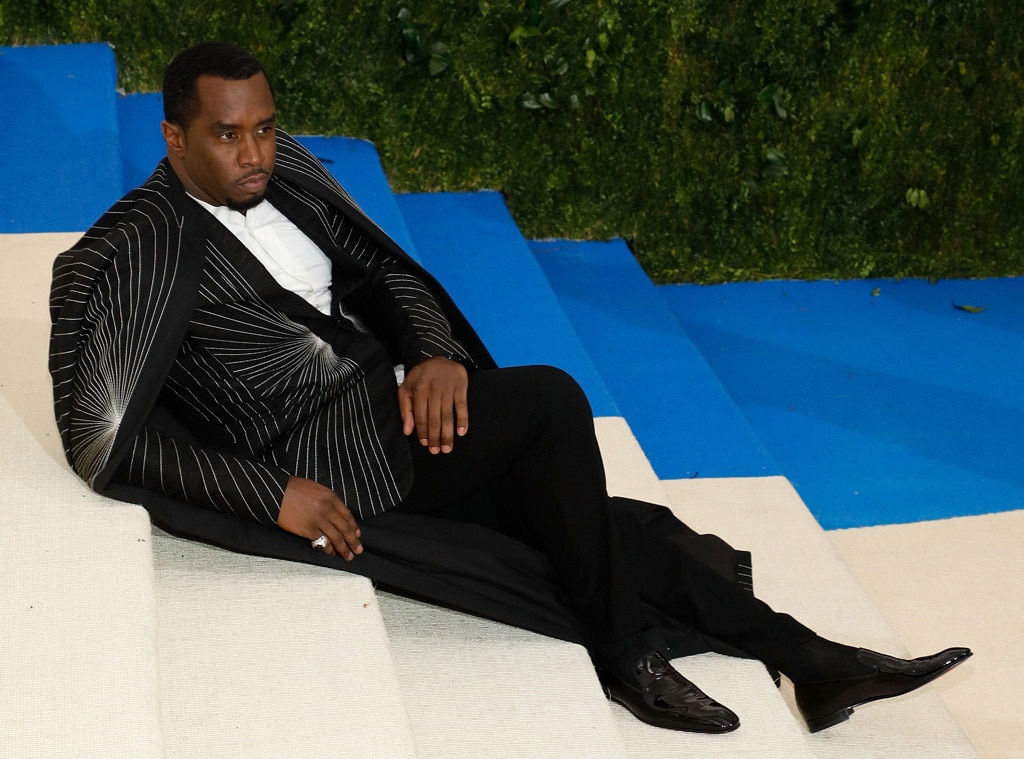
Sean Diddy Combs, Met Gala 2017On Wednesday (May 10), Forbes released its annual list of hip-hop’s wealthiest artists of 2017. Sean Combs, aka Diddy, made the top of the list with a net worth of around $820 million, all thanks to an ongoing partnership with Ciroc vodka, as well as his investment in the TV network Revolt and his continued presence in the music industry.
In second, Jay Z is still a crowning titan of hip-hop royalty with $810 million, followed by Dr. Dre ($740 million) -- and then, after a steep drop off, Birdman($110 million) and Drake ($90 million) to round out the top five.